Planning guide · Turf care

How to maintain artificial turf in San Diego.

What artificial turf maintenance involves in San Diego County: debris removal, brushing, rinsing, weeds, pet areas, and when to call an installer about seams and edges.

The short answer

Artificial turf is not maintenance-free. Routine care means removing leaves and debris, brushing the fibers upright, rinsing where appropriate, watching for weeds at edges and seams, and dealing with pet waste promptly. Follow the written care instructions for your turf product, and have an installer look at any seam or edge that starts to lift.

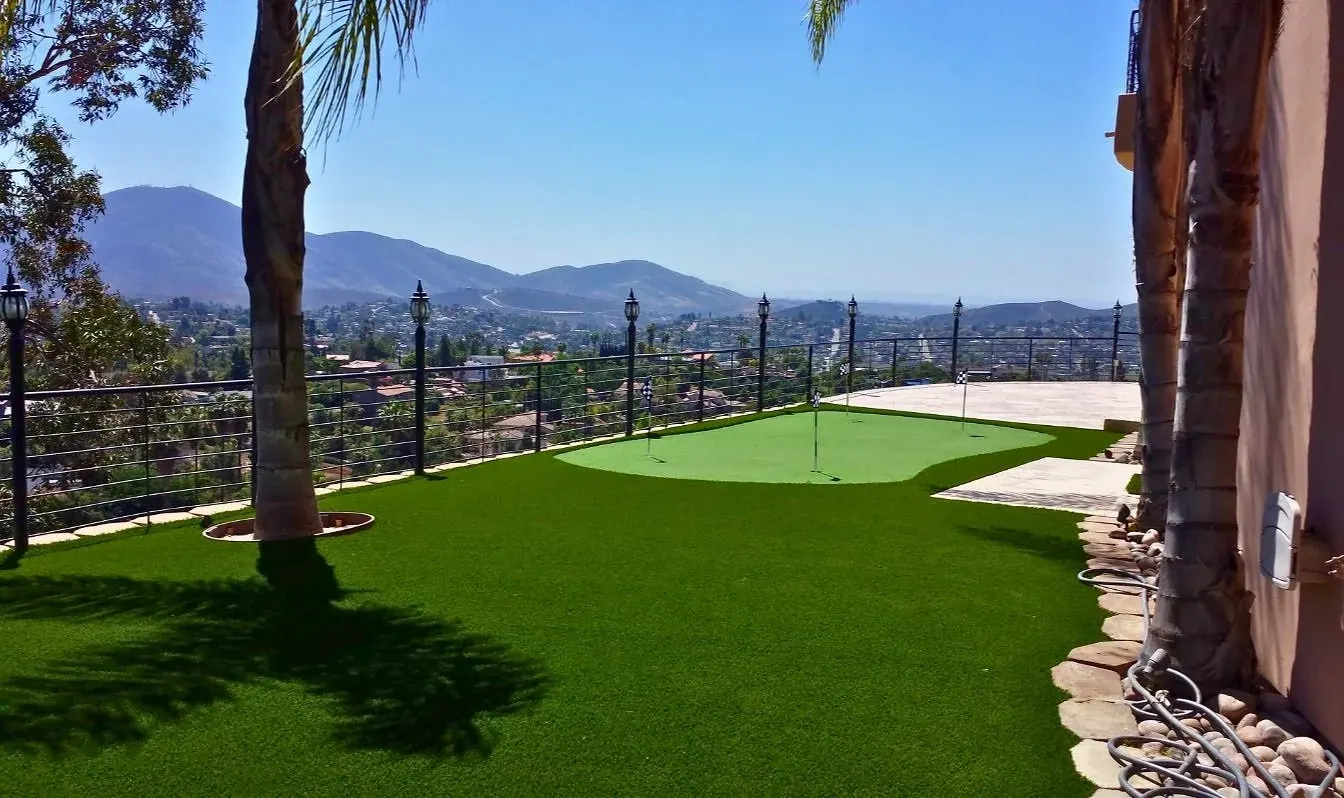
Backyard putting green with curved fringe and landscape borders

Published by LuxTurfscape on . Reviewed .

How often does turf need care?

How often each task is needed depends on traffic, trees, sun, and pets. A quiet front lawn needs less than a shared dog run. The usual list:

  • Remove leaves, twigs, and debris before they break down on the surface
  • Brush high-traffic areas so the fibers stand up instead of matting
  • Rinse dust and pollen off where appropriate
  • Pull weeds at the edges and seams while they are small
  • Pick up pet waste promptly and rinse pet areas
  • Check infill levels in spots that get the most use

Pet areas

Pet areas need the most attention: remove solid waste promptly, rinse on a routine, and use only cleaning products the turf manufacturer allows. If odor comes back quickly after cleaning, drainage under the turf may be the cause. Our pet turf drainage guide covers planning that before installation.

Signs to call an installer

Some problems are not routine care, and they are smaller jobs when caught early:

  • A seam that is opening or lifting
  • An edge pulling away from its border
  • A low spot where water sits after rain or rinsing
  • Ripples or wrinkles in the surface
  • Odor that returns soon after cleaning

Shared and commercial turf

At HOAs and apartment communities, the landscape maintenance crew often handles turf along with everything else. Give them the product care instructions from the installer, and agree on who checks seams and edges and how often. A dog run or a busy courtyard needs its own schedule, separate from the quieter areas.

Questions about turf care

Clear answers before the bid.

How often does artificial turf need maintenance?

It depends on traffic, trees, sun, and pets. Debris removal and pet cleanup are ongoing. Brushing and infill checks matter most in the areas that get the heaviest use.

Why does artificial turf go flat?

Foot traffic presses the fibers down over time. Brushing high-traffic areas helps them stand back up, and checking infill levels in those spots helps too.

How do you stop pet turf from smelling?

Remove waste promptly, rinse the area on a routine, and use only cleaners the manufacturer allows. Odor that returns quickly can point to a drainage problem under the turf.

Can weeds grow through artificial turf?

Yes, mostly at edges and seams and from windblown seeds. Good site preparation reduces weed pressure, but no outdoor surface stays permanently weed-free.

What should I do about a lifting seam?

Have an installer look at it early. A small lifted seam is easier to repair than a large one, and it can become a trip hazard.

San Diego County

Walk the property with us.

Send the property address, the areas you want converted, and your timeline. We will set up a site walk.

Request a site walk Call (619) 312-7998