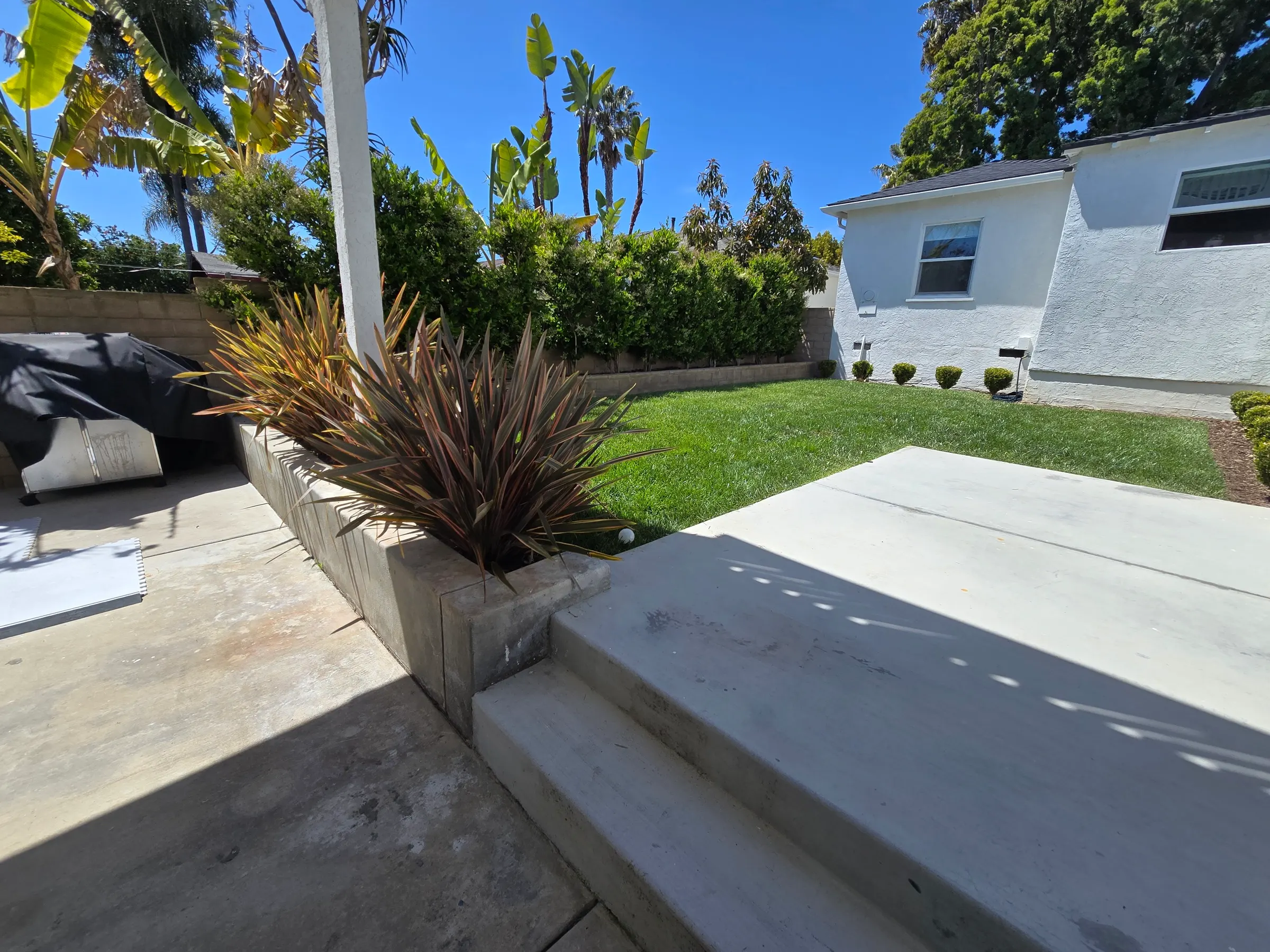
The short answer: Artificial turf suits yards where irrigation, mowing, mud, or heavy pet and play traffic are the main problems and the area gets used every day. Natural grass suits yards where surface heat, cooling, soil life, and a living landscape matter more than water and upkeep. Many San Diego properties end up with both: turf where the traffic is, and planting where the yard needs to breathe.
How do they compare?
| Factor | Artificial turf | Natural grass |
|---|---|---|
| Irrigation | No regular watering for the turf itself. Occasional rinsing for pet areas and dust. | Regular irrigation through the dry months, subject to local watering rules. |
| Routine upkeep | Removing debris and pet waste, rinsing, and brushing high-traffic areas. | Mowing, edging, fertilizing, aeration, and weed and pest control. |
| Surface heat | Gets noticeably hotter than grass in direct afternoon sun. Product choice, shade, and rinsing help, but do not remove it. | Stays cooler through transpiration as long as it is watered and healthy. |
| Pets | No mud or dug-up patches. Needs drainage, waste removal, and rinsing planned from the start. | Urine spots, worn paths, and digging are common under regular dog traffic. |
| Drainage | Depends on the base and the site's grade. Water still has to go somewhere safe. | Soil absorbs water, but compacted or clay soil can puddle and stay muddy. |
| Shade and slopes | Stays green in shade where grass thins out. Slopes need proper base and edge work. | Struggles in dense shade, and steep slopes are hard to mow. |
| Upfront work | Excavation, base preparation, edging, and installation are a larger upfront project. | Sod or seed with irrigation is usually a smaller upfront project. |
| Over time | Wears with use and sun exposure. Eventually needs replacement as a system. | Ongoing costs for water, care, and repairs, and it can be renovated in sections. |
| Living landscape | Not a habitat. Pairs well with planted borders and trees. | Living soil and plant cover, though a lawn is a narrow habitat compared with mixed planting. |
Who should choose artificial turf?
- Households with dogs that have worn the lawn down to dirt and mud.
- Yards used hard and often: kids' play areas, side yards, and putting or practice areas.
- Owners who want to stop irrigating and mowing a lawn without giving up a usable green surface.
- Shaded or awkward areas where grass keeps thinning no matter how it is watered.
Who should keep natural grass?
- Yards in full afternoon sun where people walk barefoot and there is no shade to add.
- Owners who enjoy lawn care and have a healthy lawn with no drainage or traffic problems.
- Properties where cooling, soil health, and plant cover are priorities.
- Areas where a different choice altogether, such as drought-tolerant planting or a paved patio, would serve the space better than either surface.
What should you check before removing a lawn?
- Where the water goes. Note low spots, downspouts, and surfaces that slope toward the house. Turf does not fix drainage. The base design has to.
- Sun exposure. Watch the yard in mid-afternoon. A west-facing yard in full sun is where turf heat matters most.
- How the space is used. Paths, play zones, pet routes, and seating should shape the layout before any material is chosen.
- Rebates and HOA rules. Check current lawn-replacement rebate terms with your water agency before you remove anything. Some programs require living plants and exclude artificial turf; see the San Diego turf rebate guide. HOAs may also have rules on visible front-yard surfaces, within the limits of California's HOA turf law.
- Edges and transitions. Where turf meets pavers, planting beds, or a pool deck, the edge detail decides how clean the result looks years later.
Can you combine both?
Often, yes. A common layout puts turf where traffic is heaviest, such as the dog run, the play area, or the strip the kids cross every day, and keeps planting, trees, or a smaller lawn where shade and cooling matter. The two areas need a clean edge and separate irrigation zones, so the remaining planting gets water without the turf getting soaked.
Next step
The right answer depends on the actual yard: sun, soil, grade, pets, and how often each part gets used. See how LuxTurfscape approaches artificial turf installation and pet turf, read the turf cost factors guide, or share your project details for a site-specific recommendation.